

Stay abreast of COVID-19 information and developments here
Provided by the South African National Department of Health
Have holidays
like no one else

Start by forgetting five-star hotels and Michelin-star dining. The new luxury travel gives conspicuous consumption a pass in favour of rare, transformative experiences.
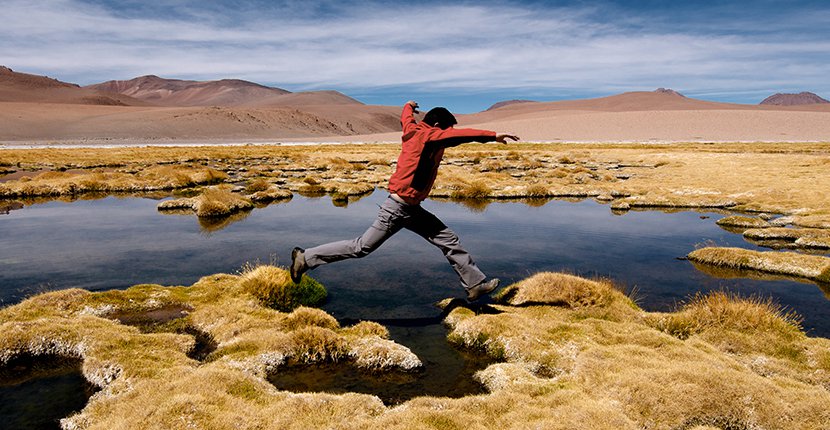
Trek through the Atacama Desert or ride through Western Mongolia on horseback and you won’t catch sight of a branded hotel, much less a limousine or the kind of haute cuisine establishment that, despite the five-year wait for a reservation, serves roughly the same menu in Paris as its counterpart in Beijing. Yet the absence of these markers of international opulence is precisely what makes these trips luxurious.
At least, this seems to be the view of a growing number of high net worth travellers. Forbes reports that about 20 per cent of private-jet travellers take at least one ‘experiential’ trip every year, spending an average of US$100 000 a pop.
This taste for unique experiences tends to play out in two ways, says Katie Marshall, Media and PR Manager for active-travel company Butterfield & Robinson. First, there’s ‘transformational travel’, which is what happens when people are pushed out of their physical, psychological or emotional comfort zones.
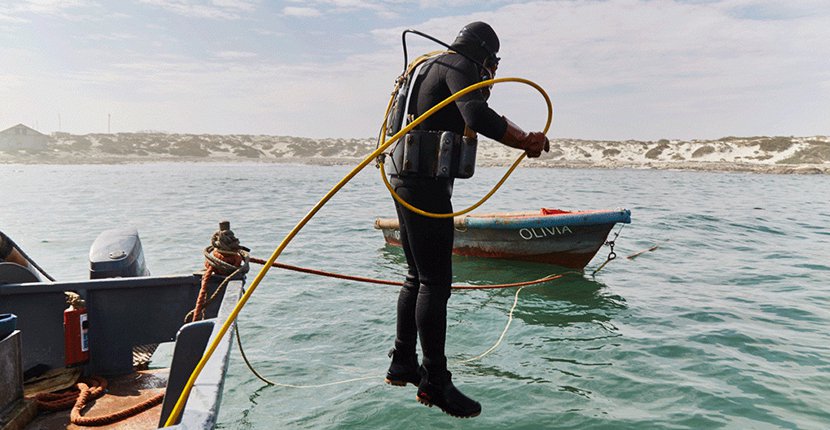
Under the umbrella of transformational travel, Les Aupiais, Editor of South African luxury magazine Private Edition, identifies a steep rise in extreme travel offerings, ‘where – for a not inconsiderable amount of money – there is an element of survival, discomfort, and even a degree of danger’. Aupiais points to the recent launch of the world’s first ‘diamond safari’, offered by Ellerman House and Benguela Diamonds, in which travellers must dive into icy waters off SA’s west coast for the chance to retrieve an alluvial diamond.
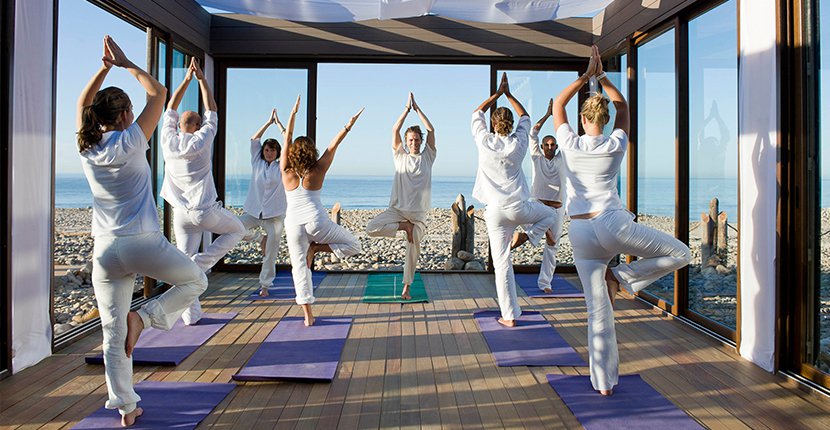
While transformation is often seen in terms of physical development, Marshall predicts that ‘an appetite for a deeper sort of spiritual transformation’ could see more high net worth travellers opting for soul-searching or lifestyle-altering getaways, such as the year-long Ultimate Luxury Around the World Wellness Trip, which includes Ayurvedic treatments in the Himalayas and daily yoga sessions on a private island.
The second category of experiential travel, Marshall says, is a kind of frontierism, a yearning to explore the planet’s few remaining hidden places or, in the case of space programmes from the likes of Elon Musk and Sir Richard Branson, even beyond it.
‘We’re seeing an increasing number of requests for adventure in remote places,’ she says. ‘Sometimes we have to create our own infrastructure on the fly – we ran Burma’s first pop-up hotel using the houses of the village leaders in a remote part of the Shan state.’
‘This is a trend we’ve been tracking for a while,’ says Dion Chang, trends expert and founder of Flux Trends. ‘A new category – the “transumer” – is seeking out transient experiences.’
‘The 2008/9 recession brought about a radical shift in patterns of consumption. Fast fashion waned and we saw a movement towards all things artisanal and handmade,’ he says. ‘Latched on to this, we started tracking new kinds of tourism, such as more and more people going to see things before they disappear or become extinct.’
It’s not just the one per cent, Chang says. In fact, there’s an overlap between the inclinations of high net worth travellers and millennials more broadly. Whereas older generations wouldn’t dream of booking a trip except through an agent, millennials are the ‘silent travellers’ who, with the help of TripAdvisor, build their own experiences, actively avoiding tourist traps. For them, as for those of serious means, it’s about stories, not stuff.
For UK-based luxury travel specialists Abercrombie & Kent, the real luxury isn’t in one-upmanship but in offering their clients highly personalised experiences. For instance, when travellers to St Petersburg requested insight into the art world – minus the museum crowds – Abercrombie & Kent arranged for them to join the famous Russian graphic artist Yuri Petrochenkov for afternoon tea.
Airbnb is also tapping into this desire for personalised travel. Late last year, it launched Trips, a service through which locals can offer guided tours and other experiences to travellers.
Asked about his most indulgent trip, the well-travelled Chang tells of the time he and his partner went to London for the express purpose of seeing a single art deco exhibition.
This kind of bucket-list travel certainly can be very costly, but it’s ultimately less about how much you spend and much more about its significance to you – and only you.
When formulating your investment strategy, we focus on your specific needs, life stage and risk appetite.
Greg Stothart has spent 16 years in Investment Management.

Have a question for Greg?